
Technical Analysis: How JJY Secured Its Position as an Advanced Carbon Fiber Tube Solutions Provider from China
Understanding the mechanical behavior, material alignment, and curing dynamics of these components is essential for optimizing modern industrial applications.
1. Material Selection Framework and Fiber Grading Dynamics
The mechanical performance of any carbon fiber structure is heavily dictated by the characteristics of its precursor filaments and the orientation of its matrix compilation. The manufacturing architecture utilized focuses on utilizing premium raw material grades, explicitly T700 and T800 carbon fiber prepregs. Standard modulus fibers such as T300 provide a highly dependable baseline for typical commercial uses, delivering a balanced tensile strength of approximately 3530 Megapascals (MPa) and a tensile modulus of 230 Gigapascals (GPa). However, high-performance structural engineering demands significantly elevated physical properties to withstand rigorous environmental stressors.
By integrating T700 and T800 carbon fiber prepregs, the resulting composite matrices achieve exceptional mechanical attributes. T700 carbon fiber delivers an advanced tensile strength of roughly 4900 MPa while maintaining a standard modulus, making it exceptionally resilient against high-impact loads and structural stress. For projects demanding extreme rigidity and minimal deformation under load, T800 intermediate modulus carbon fiber is utilized. T800 fiber features a tensile strength of approximately 5490 MPa and an elevated tensile modulus reaching 294 GPa. The selection of these high-grade materials ensures that the finished tubing exhibits excellent dimensional accuracy, low thermal expansion co-efficient, and superior fatigue resistance, allowing engineering teams to design structures with minimal wall thickness without sacrificing structural safety factor thresholds.
2. Advanced Structural Orientations and Spatial Fiber Alignment
Carbon fiber is inherently anisotropic, meaning its mechanical properties are highly directional and aligned primarily along the longitudinal axis of the individual filaments. To transform these linear properties into multidimensional structural strength, precision fiber alignment strategies are strictly enforced during the manufacturing phase. Raw carbon fiber prepreg layers are meticulously arranged at specific spatial angles, including 0-degree, 45-degree, and 90-degree orientations, depending on the targeted operational loads of the final application.
Fibers aligned parallel to the tube axis (0 degrees) provide maximum bending stiffness and longitudinal tensile strength, which are vital for long structural booms, telescopic poles, and cantilever arms. Conversely, layers oriented perpendicular to the axis (90 degrees) provide circumferential reinforcement, maximizing hoop strength to prevent crushing under external clamping forces or internal pressures. To counter torsional or twisting forces common in robotic joints and multirotor UAV motor arms, prepreg layers are oriented at alternating positive and negative 45-degree angles. This complex multi-axial orientation system allows for the creation of custom composite tubing tailored to specific structural demands, ensuring a high stiffness-to-weight ratio and optimal load distribution across all geometric axes.
3. Roll-Wrapped Manufacturing Architecture and Precision Tolerances
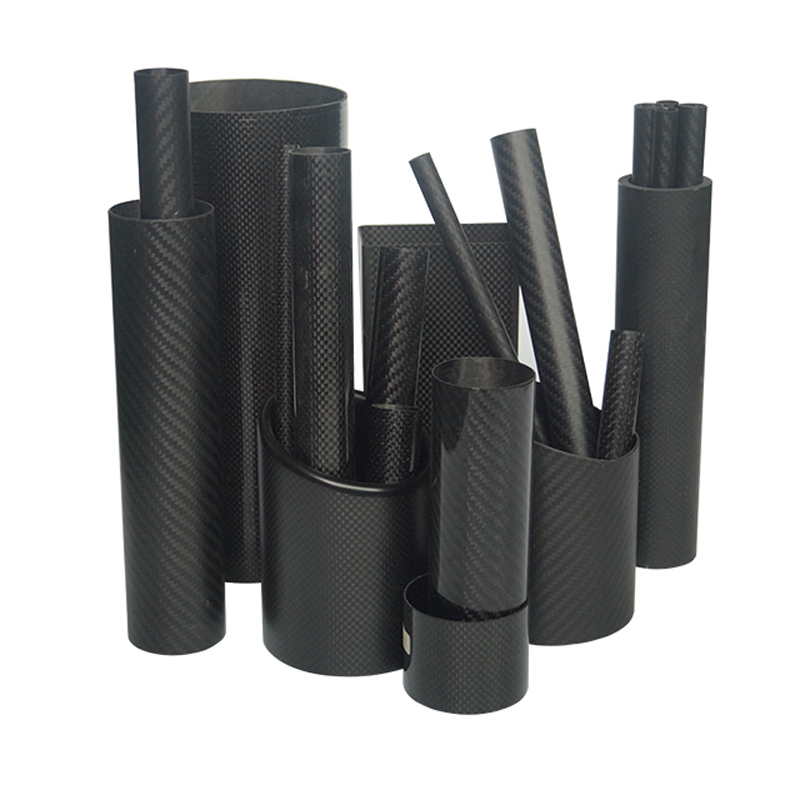
The core structural product line leverages a highly refined roll-wrapped manufacturing workflow, which is widely recognized as the superior technique for producing high-strength, tight-tolerance round and square tubing. This process begins with multi-layer unidirectional carbon fiber prepreg alongside an exterior layer of 3K weave carbon fiber fabric. These materials are wound under high mechanical tension onto precision-ground steel mandrels, which define the inner diameter (ID) of the final product.
The outer layer of 3K fabric-available in classic twill patterns with an enhanced diagonal structure for superior torsional stiffness, or uniform grid plain weaves for balanced multi-directional strength, coupled with modern anti-reflective matte finishes for scratch resistance or premium high-shine gloss coats for UV and corrosion protection-serves a dual purpose: it forms a durable, scratch-resistant shield against delamination while providing the distinctive, premium aesthetic highly valued in premium consumer applications. Following the wrapping process, the raw assemblies are wrapped in specialized compression tapes and transferred to computer-controlled curing ovens. Inside, high temperatures and pressures activate the premium epoxy resin matrix, fusing the layers into a seamless, high-density composite matrix. The roll-wrapped method yields far superior straightness, structural uniformity, and tighter inner diameter tolerances compared to continuous pultrusion processes, entirely eliminating the structural warping risks often seen in low-tier alternatives. This makes roll-wrapped tubing exceptionally well-suited for high-vibration drone arm assemblies and demanding robotic linkages.
4. Custom Fabrication and Diversified Profile Engineering
Modern industrial applications require a diverse spectrum of geometric shapes and structural configurations, making standardized stock components insufficient for advanced projects. Recognizing this challenge, comprehensive customization capabilities have been developed to support both Original Equipment Manufacturer (OEM) and Original Design Manufacturer (ODM) clients worldwide. The available tooling inventory includes an extensive selection of mandrels, enabling the swift production and delivery of specialized profiles within a 7-to-10-day turnaround period for established sizes.
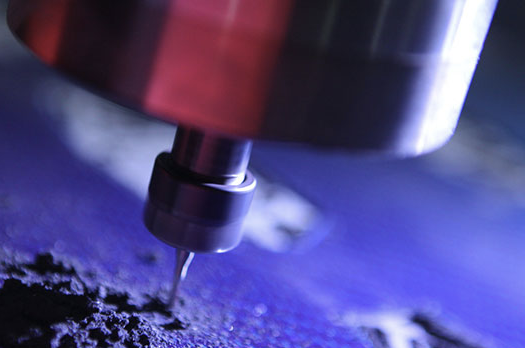
The manufacturing capabilities span multiple structural categories, including roll-wrapped round tubes, high-strength square tubes, solid carbon fiber rods, structural poles, flat profiles, and complex heterogeneous geometries utilizing advanced material compositions such as flagship 3K + UD carbon blends (combining 3K woven fiber with unidirectional layers for optimized bending rigidity and impact tolerance) and cost-effective glass fiber composites (offering reliable electrical insulation and strength for non-critical, high-volume applications). For instance, high-strength square tubing is fabricated using unidirectional prepreg layers arranged in precise 0/90-degree orientations and cured under extreme pressure. This profile delivers enhanced bending stiffness, high crush resistance, and exceptional axial strength, making it an ideal choice for heavy-duty industrial framing and automated assembly structures. Furthermore, custom capabilities support large-diameter large tubes up to 60 millimeters (mm) in diameter, alongside specialized ultra-length specifications. These custom components can be integrated with professional CNC carbon fiber cutting and drilling services to supply plug-and-play components tailored perfectly to complex engineering prints.
5. Alternative Pultrusion Methodologies and Comparative Analysis
To address applications where cost-efficiency and high longitudinal throughput are the primary requirements, specialized pultrusion manufacturing lines are maintained alongside the premium roll-wrapped workflows. The pultrusion process involves drawing continuous carbon fibers through a high-precision steel die while simultaneously injecting a specialized thermosetting resin matrix. Heated dies initiate the chemical cross-linking of the resin, forming a fully cured, continuous profile that is subsequently cut to requested lengths. This method aligns all structural fibers strictly along the longitudinal axis of the rod or tube.
Consequently, pultrusion products deliver exceptional axial tensile strength and bending resistance, making them ideal reinforcements for foam or balsa structures, structural tie-rods, and lightweight sports gear. However, a technical comparative analysis reveals distinct trade-offs between the two methodologies. Because pultruded components lack cross-ply or circumferential reinforcements, they exhibit lower hoop strength and are more susceptible to splitting under crushing or torsional loads. Furthermore, the straightness tolerances achieved via pultrusion are inherently less precise than those achieved through roll-wrapped mandrel molding. Due to these characteristics, pultruded rods and tubes are highly recommended for unidirectional structural reinforcement, whereas roll-wrapped tubing remains the recommended standard for critical components subjected to complex, multi-directional operational loads-such as unmanned aircraft motor arms and industrial robotic links.
6. Strategic Synthesis of Corporate Competencies and Industrial Solutions
Achieving a reliable balance between advanced structural performance and volume manufacturing efficiency requires a robust corporate infrastructure and a strict dedication to quality assurance. Operating as a specialized manufacturer with independent production facilities, JJY retains absolute control over every stage of production, from raw prepreg quality checks to final dimensional tracking. This vertically integrated framework enables the company to maintain strict quality control standards, offer competitive pricing models, and sustain efficient production capacities capable of meeting large-scale commercial demands.
The comprehensive product portfolio extends beyond composite tubing to encompass a complete eco-system of lightweight parts, including scalable sheet dimensions ranging from compact 400x500mm panels up to massive 3000x6000mm industrial plates, with precise thickness specifications spanning from ultra-light 0.2mm foils to heavy-duty 50mm structural plates, custom FPV drone frames (spanning varied dimensional configurations from 3-inch to 24-inch specs), precision CNC parts, and matching assembly hardware such as specialized standoffs, screws, and fasteners. This diverse offering allows the enterprise to act as an integrated partner for distributors, engineering teams, and industrial manufacturers globally. By pairing advanced material science with customer-oriented technical support, the organization continues to deliver high-performance, durable, and reliable composite material solutions that assist modern industries in optimizing efficiency, reducing structural mass, and extending operational life cycles across the globe.
Official Corporate Portal: https://www.jinjiuyi.net/
JJY
JJY
Legal Disclaimer:
EIN Presswire provides this news content "as is" without warranty of any kind. We do not accept any responsibility or liability for the accuracy, content, images, videos, licenses, completeness, legality, or reliability of the information contained in this article. If you have any complaints or copyright issues related to this article, kindly contact the author above.
