

Scientists uncover hidden risks of biodegradable plastics through fish blood
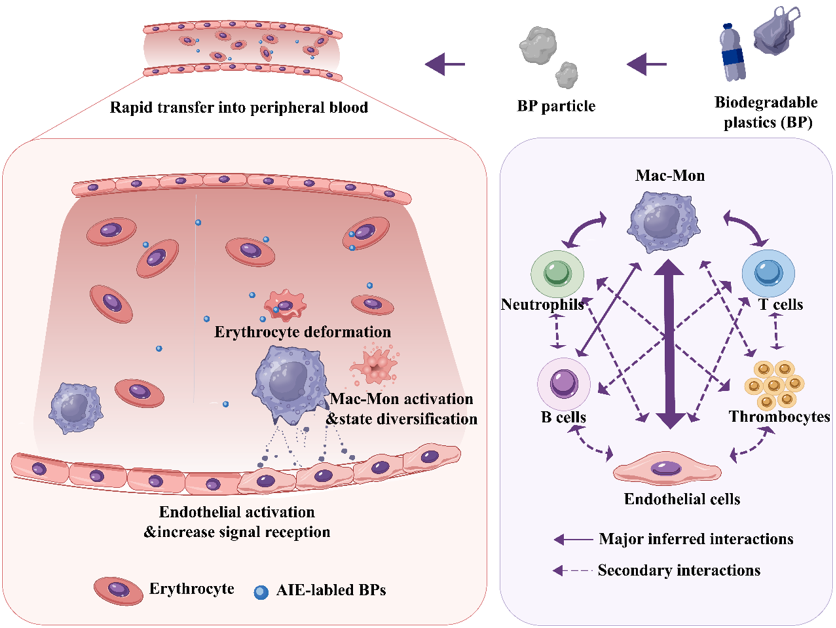
HOW THE BIODEGRADABLE PLASTICS INFLUENCE FISH BLOOD SYSTEM.
FAYETTEVILLE, GA, UNITED STATES, October 21, 2026 /EINPresswire.com/ -- Researchers have identified rainbow trout blood as a promising platform for monitoring the biological hazards of biodegradable microplastics. By combining advanced fluorescence imaging with single-cell analysis, the study reveals how these particles interact with circulating blood cells and disrupt immune-related processes. The findings also highlight an overlooked concern: environmental aging may alter and potentially intensify the harmful effects of plastics designed to biodegrade.
Biodegradable plastics are increasingly used as environmentally friendly alternatives to conventional plastics. Yet, being biodegradable does not necessarily mean being harmless. As these materials enter rivers, lakes, and oceans, they can break into tiny particles known as microplastics, which may undergo further changes as they are exposed to sunlight and other environmental conditions
Although scientists have studied how microplastics affect organs such as the liver and intestine, their effects on blood remain much less understood. In a study published in the journal Environmental Chemistry and Ecotoxicology, researchers Difei Tong and Wen-Xiong Wang explored a new approach to understanding these risks by examining how biodegradable microplastics affect the blood of rainbow trout.
"Blood travels throughout the body and connects different organs, making it a promising place to look for early signs of environmental stress," explains Difei Tong, the study's first author. "Instead of focusing only on damage to individual organs, we wanted to understand how blood cells respond to microplastics and whether these responses could help us detect their potential hazards."
To investigate this possibility, the researchers used fluorescent labels to make tiny particles of a common biodegradable plastic, known as PLA, visible under a microscope. This allowed them to observe how the particles interacted with blood cells. They then used single-cell RNA sequencing to characterize the responses of different blood-cell populations, revealing how different cell types responded to plastic exposure.
“We found that PLA microplastics were associated with changes in the balance and activity of several types of blood cells, particularly those involved in immune defense,” shares Tong. “There’s also evidence suggesting that exposure could affect how blood cells communicate with one another. Importantly, when the plastic particles were aged under simulated sunlight, their effects changed.
In particular, blood samples from fish exposed to aged particles showed more noticeable changes in red blood cell shape, together with distinct changes in immune-related activity. “These findings suggest that the risks of biodegradable plastics may change as the materials weather in the environment.,” adds Tong.
According to Wen-Xiong Wang, the investigator who led the study, the findings raise important questions about how biodegradable plastics are evaluated. "Biodegradable plastics are often seen as a solution to plastic pollution, but their ability to break down does not automatically guarantee their safety," Wang says. "Our study shows why it is important to consider what happens to these materials as they age in the environment."
The researchers hope their findings will encourage wider use of blood-based approaches to study the effects of environmental pollutants. Because blood contains many different types of cells that respond to stress, it may offer a valuable window into how organisms react to microplastics. “By providing a broader picture of these responses, this approach could help scientists identify potential hazards and contribute to the development of safer biodegradable materials,” adds Wang.
References
DOI
10.1016/j.enceco.2026.09.003
Original Source URL
https://doi.org/10.1016/j.enceco.2026.09.003
Funding Information
This study was supported by the General Research Fund of Hong Kong Research Grants Council (11104225) and the National Science Foundation of China (42430709, 22276157). W.-X. Wang was supported by a 5-year Senior Research Fellowship from the Hong Kong Research Grants Council (SRFS2425-1S06).
Lucy Wang
BioDesign Research
Legal Disclaimer:
EIN Presswire provides this news content "as is" without warranty of any kind. We do not accept any responsibility or liability for the accuracy, content, images, videos, licenses, completeness, legality, or reliability of the information contained in this article. If you have any complaints or copyright issues related to this article, kindly contact the author above.
