

Shanghai Tongjie as a Best Containerized Seawater Desalination System Supplier: CE and OEM Configuration
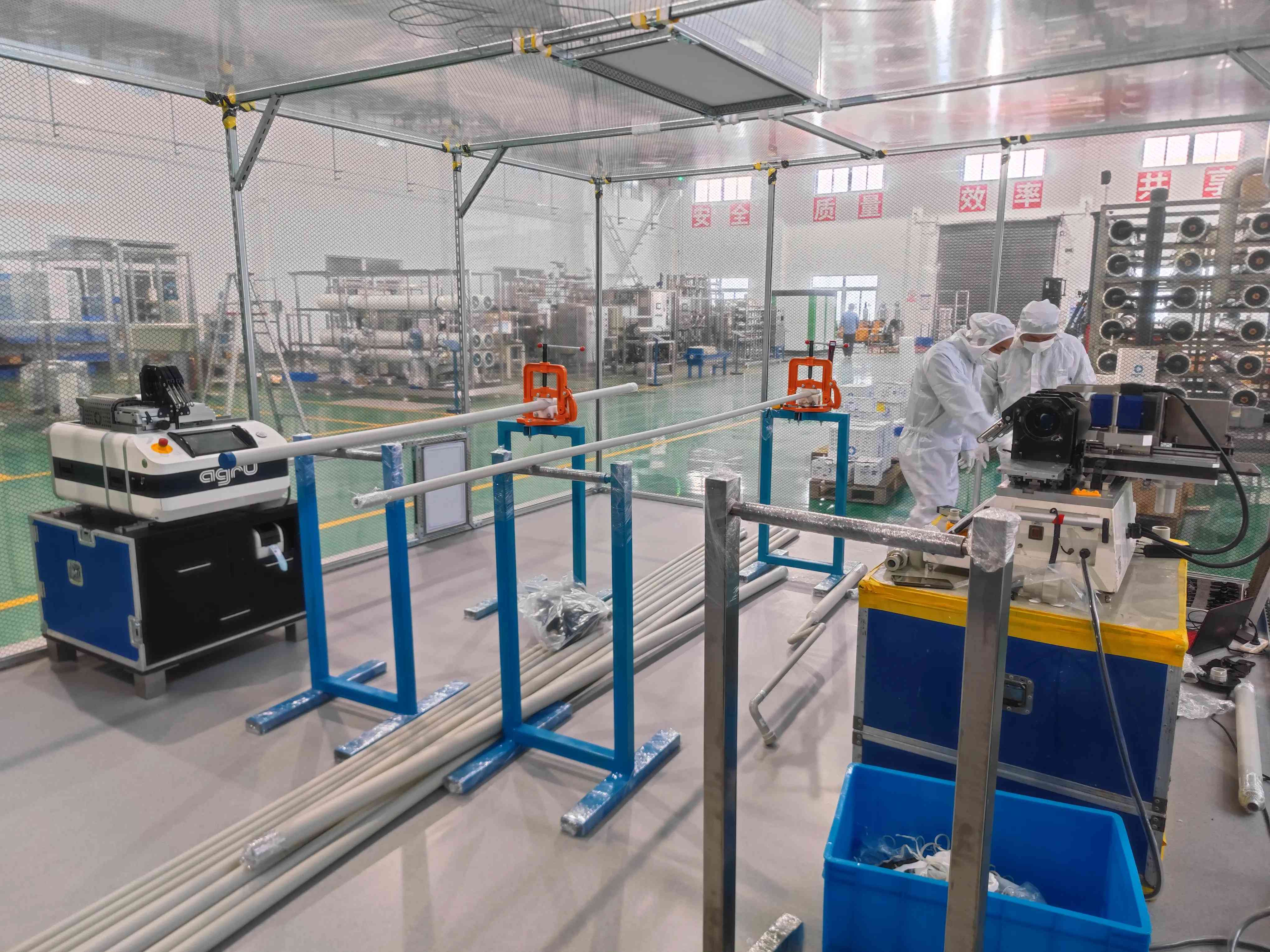
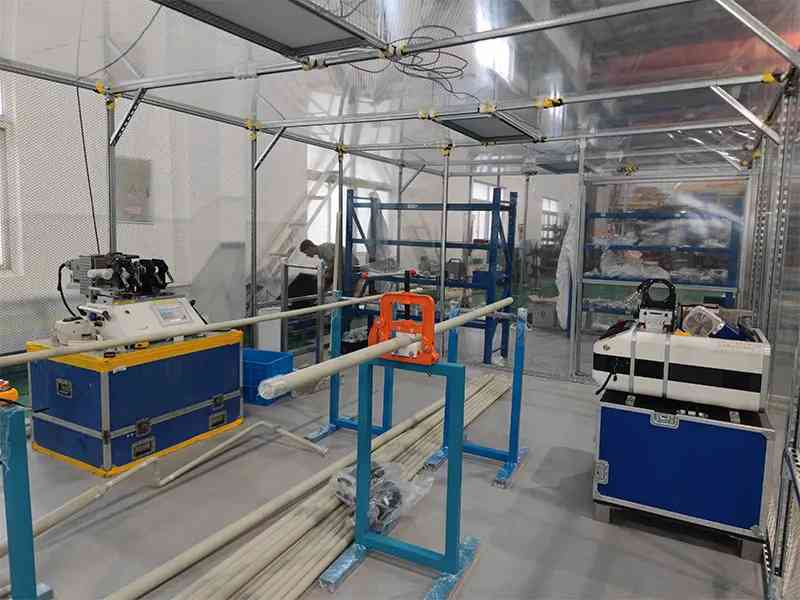
For project developers and system integrators, successful custom manufacturing requires establishing precise contractual boundaries between process engineering, component sourcing, and certification. Clarifying these technical boundaries early eliminates costly scope disputes and ensures delivered containerized modules interface reliably with target project utilities.
Containerized SWRO Sourcing Starts with Configuration Scope
Procurement teams frequently blur the distinction between OEM (Original Equipment Manufacturer) and ODM (Original Design Manufacturer) delivery models. In water treatment projects, establishing this boundary is the critical first step in defining commercial scope division and engineering responsibilities.
Under a pure OEM framework, the client provides the approved design package: process and instrumentation diagrams (P&IDs), general arrangement (GA) drawings, piping isometrics, electrical single-line schematics, and an approved vendor list (AVL) for core components. The factory executes fabrication, structural assembly, pipe welding, wiring, and pre-commissioning strictly to the provided drawings, applying the client’s private brand nameplate upon release. In this model, process design and performance responsibility remains with the client’s engineering team.
Conversely, an ODM or collaborative engineering framework applies when the client defines site boundary conditions—feedwater analysis, required permeate flow, target TDS, ambient climate conditions, and local utility characteristics—relying on the manufacturer to perform process simulations, select membrane arrays, design high-pressure pump skids, and integrate automated controls. Clarifying whether a project is build-to-print OEM or full-scope ODM ensures that design verification responsibilities are unambiguously assigned.
OEM Manufacturing Begins with Drawings, Specifications, and Performance Requirements
A disciplined OEM manufacturing process translates approved engineering documents into precise shop-floor execution. When building containerized SWRO units, the technical agreement must establish exact component specifications across mechanical, hydraulic, and electrical disciplines.
High-pressure pumping assemblies represent a primary engineering focus. Specifications must define pump metallurgy (such as duplex 2205 or super duplex 2507 stainless steel for wetted parts), motor efficiency classes (IE3 or IE4), and preferred drive mechanisms. Process piping specifications must explicitly govern materials: low-pressure piping commonly utilizes Schedule 80 UPVC or FRP, while high-pressure lines operating between 55 and 70 bar require high-grade stainless steel with fully passivated TIG weldments inspected via liquid penetrant testing.
Membrane selection and staging require matching the approved design basis to commercial elements from qualified manufacturers (e.g., Hydranautics, Dupont FilmTec, or Toray). The Bill of Materials (BOM) must freeze instrumentation choices, specifying digital magnetic flowmeters, dual-sensor conductivity transmitters, and pressure transmitters with 4–20 mA outputs communicating directly with the central programmable logic controller (PLC).
Shanghai Tongjie works directly from client-supplied engineering drawings or functional specifications, implementing strict material traceability from raw pipe stock to finished control assemblies. This structured manufacturing execution allows overseas EPCs to leverage high-precision industrial fabrication while retaining full control over system architecture and branding.
Configure the Container Around Treatment, Access, Utilities, and Site Conditions
Packaging an industrial SWRO plant inside an intermodal freight container involves far more than simply bolting equipment inside an empty steel shell. The container enclosure itself must be engineered as an industrial equipment shelter suited to aggressive marine and coastal operating environments.
Structural modifications begin with anti-corrosion protection. Standard shipping containers receive an internal and external blast clean followed by a multi-coat marine epoxy paint system achieving C5-M high-durability classification. Walls and ceilings are lined with 50 mm to 75 mm fire-retardant rock wool or polyurethane insulation finished with chemical-resistant paneling, stabilizing interior temperatures in desert or tropical climates. Industrial HVAC systems maintain positive air pressure and regulate humidity, protecting sensitive VFD inverters and PLC hardware from airborne salt spray.
Internally, spatial configuration must prioritize maintenance access over maximum equipment packing density. Standard layouts preserve continuous central aisles of at least 800 mm to allow operators to perform daily inspections and routine maintenance. High-pressure membrane pressure vessels are aligned directly with external access hatches or end doors, providing the necessary horizontal clearance to load and extract 40-inch or 80-inch membrane elements without unbolting adjacent piping headers.
Build Pre-Shipment Testing into the OEM Release Process
A comprehensive Factory Acceptance Test (FAT) protocol provides the objective release baseline for all OEM containerized equipment. Conducting rigorous hydraulic, mechanical, and electrical verification before the container leaves the factory prevents costly troubleshooting at remote project sites.
The OEM testing protocol follows a defined four-tier progression:
Hydrostatic Pressure Testing: Pressure-retaining piping manifolds, filter housings, and membrane vessels are subjected to 1.25 to 1.5 times the maximum rated design pressure under hydrostatic conditions, verifying that all weldments, flanged connections, and Victaulic couplings maintain zero leakage.
Hydraulic Flow and Flux Testing: The complete treatment train is operated with clean test water to verify pump head curves, inter-stage pressure drops, flow distribution, and valve actuation timing.
Electrical & Automation Logic Simulation: Technicians test the complete control cabinet under simulated power, verifying PLC input/output channels, touch-screen HMI displays, analog signal calibrations, and emergency safety interlocks.
Packaging & Export Preservation: Upon successful FAT sign-off, membranes are treated with biostatic preservation solution, piping is drained and sealed, and transport restraints are secured.
Providing comprehensive FAT reports, weld inspection records, and calibrated instrument certificates enables international buyers and third-party inspection agencies (such as SGS, TUV, or BV) to verify compliance before shipment release.
What CE Requirements Change in an OEM Water-Treatment Project
When containerized desalination systems are destined for the European Economic Area or markets recognizing European technical harmonisation, CE marking serves as an essential regulatory compliance gateway. In an OEM water treatment build, CE compliance spans multiple distinct European directives rather than a single component certificate.
The Machinery Directive (2006/42/EC) governs the mechanical assembly, rotating pumps, drive couplings, and structural framework, requiring comprehensive risk assessments, emergency stop circuits, and protective guarding. The Low Voltage Directive (2014/35/EU) and Electromagnetic Compatibility Directive (2014/30/EU) mandate that electrical cabinets, VFDs, and field cabling comply with strict electrical insulation, earthing, and electromagnetic noise suppression standards.
Furthermore, high-pressure piping assemblies operating above 0.5 bar fall under the scope of the Pressure Equipment Directive (PED 2014/68/EU). Depending on pipe diameter and maximum allowable pressure, piping spools must be fabricated using qualified welding procedures (WPS/PQR) by certified welders, accompanied by material test reports (EN 10204 3.1). Ensuring that OEM manufacturing incorporates these documentation trails facilitates customs clearance and satisfies regulatory compliance audits.
CE and OEM Configuration FAQ
Establishing OEM parameters and compliance pathways early clarifies engineering deliverables and avoids post-order scope changes.
What Distinguishes OEM from Custom Engineering in Water Treatment?
OEM focuses on manufacturing equipment strictly to the buyer’s drawings, BOM, and private label requirements, whereas custom engineering or ODM involves the manufacturer performing process calculations and system sizing on the buyer’s behalf.
Which Directives Apply to CE Marking on Containerized SWRO?
Standard compliance encompasses the Machinery Directive (2006/42/EC), Low Voltage Directive (2014/35/EU), and EMC Directive (2014/30/EU), with high-pressure piping manifolds evaluated under the Pressure Equipment Directive (PED 2014/68/EU).
Can Clients Specify Preferred Pump and Membrane Brands?
Yes. In OEM builds, clients commonly designate preferred brands for high-pressure pumps, reverse osmosis membranes, PLC controllers, and electrical switchgear to maintain fleet commonality across their regional projects.
What Documents Are Required for OEM Factory Acceptance?
Standard FAT documentation includes the signed FAT protocol, hydrostatic pressure test charts, electrical schematic markups, instrument calibration certificates, material test reports (MTRs), and the CE Declaration of Conformity.
How Are Containers Protected Against Coastal Corrosion?
Container shells receive C5-M marine epoxy paint systems, interior thermal insulation, marine-grade HVAC climate control, and corrosion-resistant materials (SS316L, duplex stainless steel, and FRP/UPVC) across all hydraulic piping loops.
Build an RFQ That Connects Engineering Scope With Destination-Market Requirements
An effective OEM water treatment RFQ bridges engineering specifications with commercial and regulatory expectations. Clearly defining design drawings, component brands, testing witness requirements, CE documentation needs, and private-label branding at the inquiry stage streamlines production scheduling and quotation accuracy.
Submit project P&IDs, component specifications, target capacity, and regulatory destination requirements to the Shanghai Tongjie technical team to establish manufacturing feasibility, FAT milestones, and OEM production lead times.
Shanghai Tongjie Environmental Protection Technology Co., Lt
Shanghai Tongjie
email us here
Visit us on social media:
LinkedIn
Facebook
TikTok
X
Legal Disclaimer:
EIN Presswire provides this news content "as is" without warranty of any kind. We do not accept any responsibility or liability for the accuracy, content, images, videos, licenses, completeness, legality, or reliability of the information contained in this article. If you have any complaints or copyright issues related to this article, kindly contact the author above.
